Home / Blog / Zakat on Gold Jewellery You Wear: What the Schools Actually Say
WiseEnding Blog
Zakat on Gold Jewellery You Wear: What the Schools Actually Say
The short answer
Scholars differ. The Hanafi school, and scholars like Ibn Baz and Ibn Uthaymin, require zakat on all gold and silver jewellery, even pieces worn daily, once they reach the nisab of 85 grams of pure gold and a lunar year passes. The Maliki, Shafi'i and Hanbali schools exempt jewellery genuinely worn within normal custom.
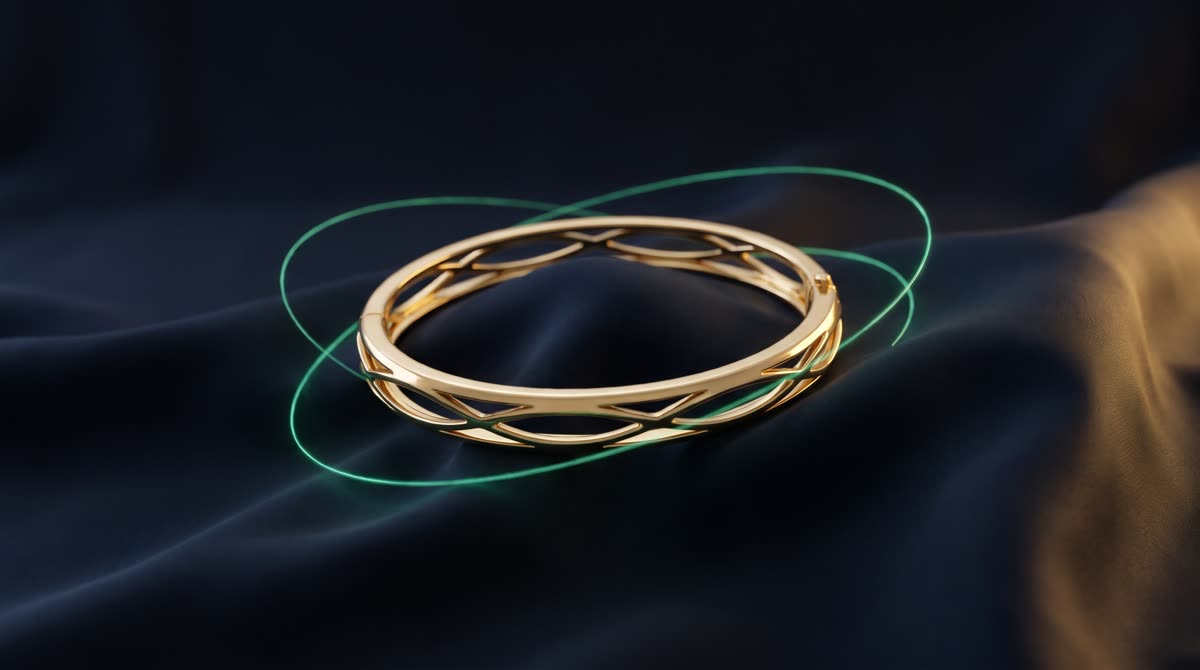
For many families, gold is not a bar in a locker. It is the bangles from a wedding, the necklace that comes out at Eid, the ring worn every day for thirty years. When zakat season comes around, that jewellery raises one of the most genuinely debated questions in Islamic finance: do you pay zakat on gold you actually wear?
The honest answer is that the scholars have differed on this for centuries, and both positions are held by the great imams of the ummah. What follows is what each school says, the jewellery everyone agrees is zakatable, and the exact calculation if you do pay.
Is there zakat on jewellery you actually wear?
There are two positions. The Hanafi school — and respected scholars beyond it, including Ibn Baz and Ibn Uthaymin — hold that zakat is due on all gold and silver jewellery, even pieces worn daily, once they reach the nisab and a lunar year passes. The Maliki, Shafi'i and Hanbali schools hold that lawful jewellery genuinely worn within normal custom is exempt, like clothing or furniture.
Both views rest on real evidence, which is why the question never goes away. What matters in practice: whichever view you follow, jewellery kept as savings is zakatable for everyone, and paying on worn jewellery is the course that is sound on every view.
What does each school say?
The Hanafi position: zakat is due on all of it
The Hanafi school treats gold and silver as zakatable by nature — they are the money of the world, whatever shape they take. The general texts make no exception for jewellery: the Qur'an warns those who hoard gold and silver without giving its due (Surah At-Tawbah 9:34-35), and the Prophet ﷺ said that no owner of gold or silver who fails to give its right escapes the consequence (Sahih Muslim 987).
There are also reports aimed at worn jewellery directly. In one, a woman came to the Prophet ﷺ with her daughter, who wore two heavy gold bangles. He asked, "Do you give the zakat on these?" When she said no, he warned of bangles of fire on the Day of Resurrection (Abu Dawud 1563). The same view is reported from Umar, Ibn Mas'ud and Ibn Abbas, and in our time it was the position of Ibn Baz and Ibn Uthaymin.
The majority position: worn jewellery is exempt
The Maliki, Shafi'i and Hanbali schools answer that zakat falls on wealth kept for growth, and jewellery kept for permissible wearing has left that category — like clothes, furniture or a riding animal. Their strongest evidence is what the Companions actually did. Aisha, the Prophet's wife, raised her brother's orphaned daughters, and they had jewellery, and she did not pay zakat from it (Muwatta Malik, Book 17). Abdullah ibn Umar adorned his daughters with gold and paid no zakat on it.
The majority also note that the chains of the bangle reports have been debated by the hadith scholars — al-Tirmidhi himself said nothing on the subject was firmly established — and that Aisha, who narrated the silver-rings report, understood it in a way that never reached everyday worn jewellery. The Hanafis reply that her nieces were minors, whose wealth owes no zakat anyway.
If you want the full background on thresholds first, our guides on how to calculate zakat on gold and the gold vs silver nisab cover them.
Which jewellery is zakatable on every view?
Here the schools agree completely. Zakat is due, at 2.5% after one lunar year, on:
- Jewellery bought as a store of value or kept "for a rainy day"
- Pieces that sit in a drawer and are never worn — whatever they were bought for
- Broken jewellery that would need melting down before it could be worn again
- Anything held for sale, which is trade stock valued at its selling price
- Gold jewellery owned by men, since wearing gold is not permissible for men
- Bars, coins and sovereigns of any kind
A necklace that never leaves the drawer is not adornment. It is savings in a pretty shape, and every school treats it that way.
How do you calculate zakat on gold jewellery?
If you follow the view that worn jewellery is zakatable — or you choose to pay it as the safer course — the calculation has four steps:
- Weigh each piece without its stones. A jeweller's scale, the receipt or the hallmark will give you the weight; gemstones are never counted.
- Find the pure gold. Multiply the weight by the karat and divide by 24. A 40 g bracelet in 18 karat holds 30 g of pure gold; in 21 karat, 35 g; in 22 karat, about 36.7 g.
- Value it at today's price of pure gold — not what you paid, and not the retail price with making charges. What the gold content itself would fetch on your zakat date is the figure; a jeweller's buy-back quote is a fair way to find it.
- Pay 2.5% once your total zakatable wealth reaches the nisab and one lunar year (the hawl) has passed over it.
The nisab is 85 grams of pure gold — twenty mithqals in the original measure. Because jewellery is alloyed, the weight of pieces that contains 85 g of pure gold is higher:
| Karat | Pure gold share | Jewellery weight holding 85 g pure gold |
|---|---|---|
| 24k | 100% | 85.0 g |
| 22k | 91.7% | 92.7 g |
| 21k | 87.5% | 97.1 g |
| 18k | 75% | 113.3 g |
One refinement: in the Hanafi school an item that is more than half gold is treated as wholly gold when testing the nisab, while the Shafi'i and Hanbali schools count only the pure content. The money you pay comes out nearly identical either way — the difference only shows at the threshold. Some South Asian Hanafi fatwa bodies also use 87.48 g (7.5 tola) rather than 85 g; the gap is under 3%, so use the figure your local scholars use.
How much jewellery counts as "normal custom"?
The schools that exempt worn jewellery limit the exemption to what women of your community customarily wear. Beyond that, the excess is treated as stored wealth. Some authorities have put a number on custom: Singapore's MUIS sets it at 860 g, above which zakat is due on the whole holding, and Selangor in Malaysia amended its fatwa in 2023 to 800 g, with zakat due on the weight above it.
Where no figure is set, judge honestly. The exemption exists for adornment, not as a device — wearing your savings for one day a year does not make them jewellery, and no school accepts that trick.
So which opinion should you follow?
If you follow a school of law, follow it. Both positions are held by the imams of this ummah, and you are not blameworthy for either. If you have no school and want one figure that is sound on every view, include your worn jewellery: if zakat was due, you have paid it, and if it was not, you have given charity that is still rewarded. Al-Qaradawi, who himself held that worn jewellery within custom is exempt, still wrote that paying on it gives a woman more peace about her duty — while no one may be forced to.
What you should not do is shop between opinions to escape the obligation. Pick a position on principle, or take the cautious path — and if your holding is large or unusual, ask a qualified scholar.
Whichever path you take, the practical foundation is the same: know what gold you own, its weight, its karat and what it is worth today, reviewed once a year on a date you choose. That is exactly the kind of quiet, annual discipline WiseEnding is built for — every asset in one private place, with zakat tracked across all of them, so nothing is guessed and nothing is missed.