Home / News / Zero-Knowledge Encryption, Explained Simply
WiseEnding News
Zero-Knowledge Encryption, Explained Simply
The short answer
Zero-knowledge encryption means your data is encrypted on your own device, with a key only you hold, before it ever reaches a service. The provider stores only unreadable ciphertext, so it cannot open, scan, or hand over your content — even under a legal order — because it never has the key. Only you can read what you save.
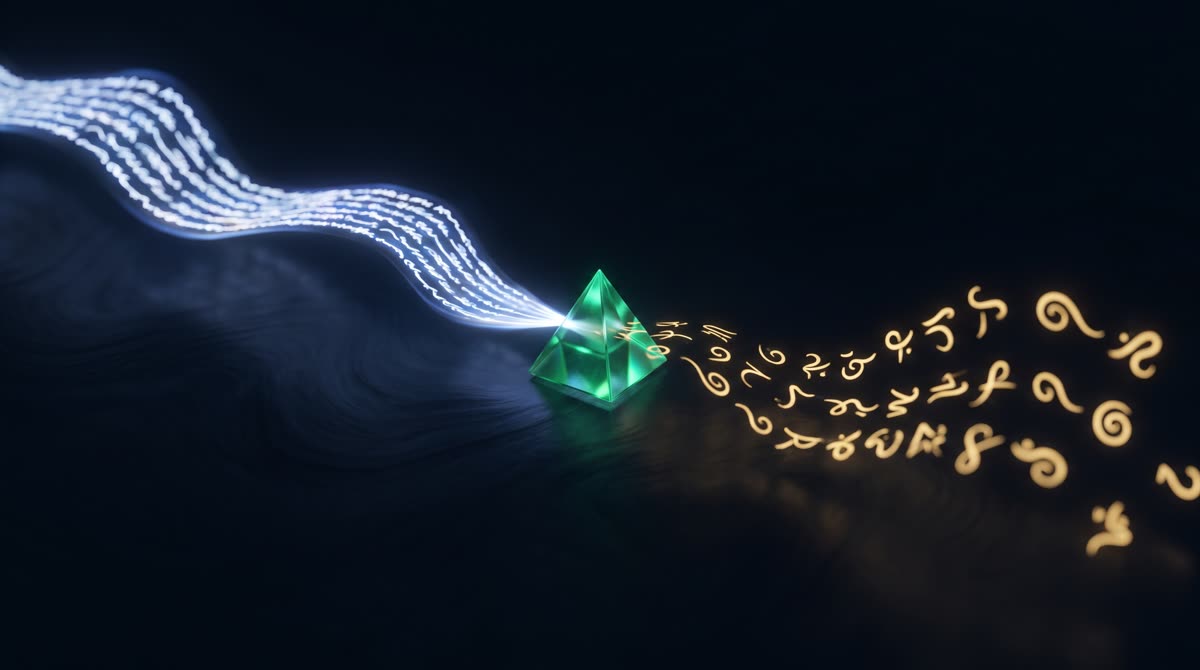
Zero-knowledge encryption is a way of building software so the company that runs it cannot read your data. Your files are encrypted on your own device, with a key only you hold, before they ever reach a server. The provider stores only scrambled ciphertext it cannot open — so a breach, a subpoena, or a rogue employee all hit the same wall.
That distinction matters more than it sounds. Most mainstream services encrypt your data "in transit" and "at rest" — but they keep the keys. That means the company can technically read your files, scan them for features, or hand them over under a legal order. Zero-knowledge moves the key off the server entirely. The guarantee stops being a policy promise and becomes a mathematical one.
What zero-knowledge encryption actually means
Zero-knowledge encryption means the provider holds your data but never holds the keys — so it cannot read a single line you save. The word "zero-knowledge" describes an architecture, not a formal cryptographic standard: the server knows nothing about the content it holds. It is a separate idea from academic "zero-knowledge proofs," a different branch of cryptography used for authentication.
The clearest way to see the difference is to compare the two models side by side:
- Standard cloud encryption. Your files are encrypted in transit and at rest, but the provider holds the keys. Convenient — it powers search, previews, and password recovery — but it means the provider can read your data, and must produce it under a valid legal order.
- Zero-knowledge encryption. The key is derived on your device from your password and never leaves it. The provider only ever sees ciphertext. Even if compelled, it has nothing readable to give.
Two services can both say "encrypted" and offer completely different privacy. With one, the company can read your data; with the other, only you can.
How zero-knowledge encryption works, step by step
You sign in, your device turns your password into a key, and everything is encrypted before it leaves your browser. The server only ever stores the scrambled result. Here is the flow in plain terms:
- You sign in. Your password never travels to the server. Your device runs it through a slow, deliberate key-derivation function (such as Argon2id or PBKDF2) to produce a secret key. The slowness is on purpose — it makes guessing the password expensive for an attacker.
- You type or upload something. Before it leaves your browser, the app encrypts it with that key using authenticated encryption such as XChaCha20-Poly1305 or AES-256-GCM. "Authenticated" means the result is both scrambled and tamper-proof: change one byte and decryption fails loudly.
- Only ciphertext travels. The readable words never leave your machine. What reaches the server is a meaningless string — a block of ciphertext.
- The server stores ciphertext. It can copy it, back it up, and serve it back to you. But it cannot turn it back into words, because it does not have the key.
- You read it again. Your device fetches the ciphertext, re-derives the key from your password, and decrypts locally. Only then do the words reappear — on your screen, in your session.
Sharing works the same way: to let someone else read a file, your device wraps the file's key for them using a key exchange, so the key passes from you to them without the server ever seeing it in the clear.
Why zero-knowledge matters for a family vault
A family vault holds the most sensitive map of your life — assets, accounts, access instructions, trusted people. If the provider can read it, that map is one breach or one legal demand away from exposure. Zero-knowledge removes that whole class of risk.
Think about what sits inside a legacy engine: the location of your will, your bank and investment accounts, the instructions your family needs on a hard day, the names of the people you trust. That is exactly the data you do not want readable by anyone but you and the people you choose.
This is the architecture WiseEnding is built on. The vault is zero-knowledge — everything is encrypted before it leaves your device, so even WiseEnding cannot read what you store. Your plan stays private while you are alive, and the Legacy Heartbeat releases it to your chosen people only when it is genuinely needed. Privacy in life, clarity for your family after.
The honest trade-off
Zero-knowledge encryption has one real cost: if you lose your password and your recovery option, the provider cannot get your data back. There is no "forgot password" flow that restores access — because a reset that worked would mean the provider could read your data too.
This is not a bug. It is the mechanism that makes the guarantee real. Absolute privacy requires absolute responsibility: your key is the only way in. That is why well-designed zero-knowledge services give you a recovery key or phrase at setup, and why it is worth storing that phrase somewhere safe and separate. The trade-off buys you something no policy can: a guarantee enforced by mathematics, not by a company's good intentions.
How to tell if a service is truly zero-knowledge
Ask one question: does the encryption happen before your data leaves your device, and does the provider ever hold the key? If keys are generated on the server, or a password-reset email restores full access to your stored content, it is not zero-knowledge — regardless of the marketing.
A few practical checks:
- Where does encryption happen? It should be in your browser or app, before upload. If it happens on the server, the provider can read your data.
- Who generates the keys? It should be your device, not the provider.
- What happens on password reset? If your data reappears after an email reset, the provider held your keys. True zero-knowledge services rely on a recovery phrase you control.
The key question is simple: who has knowledge of the encryption key? It should only be you.
Frequently asked questions
What is zero-knowledge encryption in simple terms? Zero-knowledge encryption means your data is encrypted on your own device, with a key only you hold, before it ever reaches a service. The provider stores only unreadable ciphertext, so it cannot open, scan, or hand over your content — because it never has the key.
What is the difference between zero-knowledge and normal encryption? With normal cloud encryption the provider holds the keys and can technically read your files, for features or under legal demand. With zero-knowledge encryption the key stays on your device, so only you can read your data — the provider cannot, even if it wants to.
What happens if I forget my zero-knowledge password? Because only you hold the key, the provider usually cannot reset your password or recover your data. Most zero-knowledge services give you a recovery key or phrase when you sign up; if you lose both that and your password, the encrypted data is effectively unrecoverable.
Is zero-knowledge the same as end-to-end encryption? They overlap but are not identical. End-to-end encryption protects messages between two parties — only sender and recipient hold the keys. Zero-knowledge describes a storage architecture: the provider structurally cannot decrypt what it stores. Zero-knowledge is the stricter standard for stored data.
Why does zero-knowledge matter for estate planning and a family vault? A family vault holds your most sensitive information — accounts, documents, and access instructions. Zero-knowledge encryption means that map stays private from the provider itself, so a breach or legal demand exposes nothing readable, while your chosen people can still receive it when the time comes.