Home / Blog / What Is a Dead Man's Switch — and Why Your Family Needs One
WiseEnding Blog
What Is a Dead Man's Switch — and Why Your Family Needs One
The short answer
A dead man's switch is a system that acts when you stop checking in: you confirm you're okay on a regular rhythm, and if you go silent, it releases your prepared messages, documents and access instructions to the people you chose — so your family is let in only when you can no longer let them in yourself.
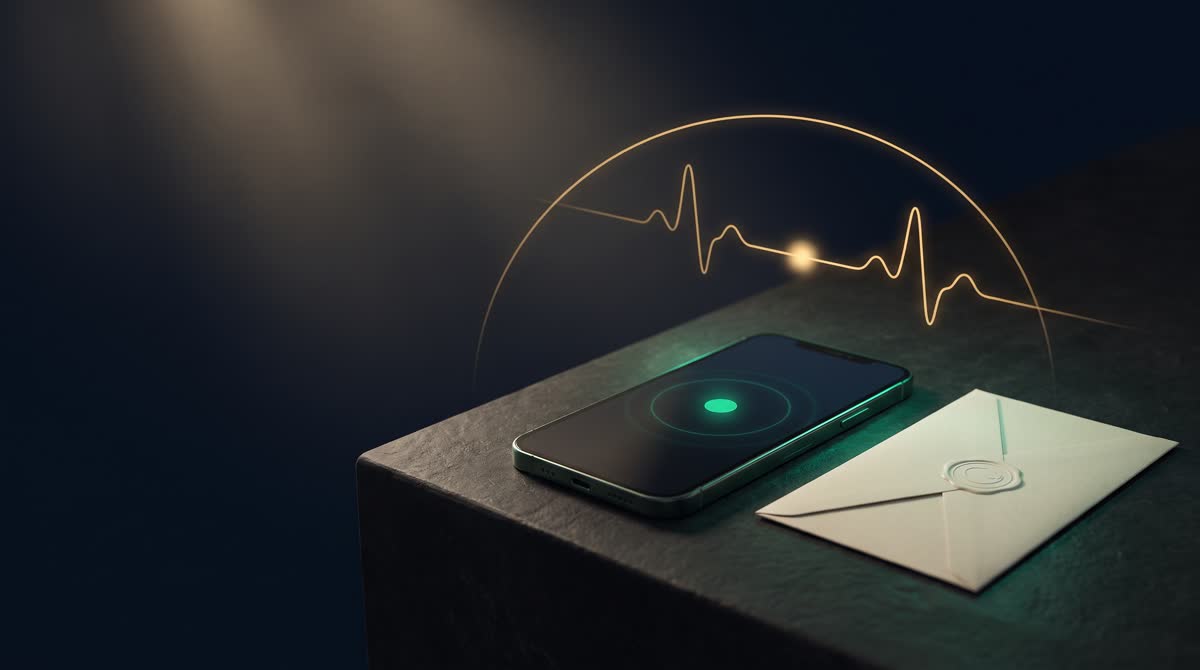
A dead man's switch is a mechanism that does something important when you stop doing something routine. The name comes from locomotives: the driver held a lever down, and if they ever let go — for any reason — the brakes came on automatically. No lever, no judgement call, no one else needed to notice. The system acted because the routine stopped.

The digital version works the same way. You check in on a regular rhythm — tap a button, answer an email, log in. As long as you keep checking in, nothing happens. If you go silent for long enough, the switch assumes you can't respond, and it releases whatever you prepared: messages, documents, access instructions. That's the core idea: the people you love are let in only when you're no longer able to let them in yourself.
For a family, that solves a very specific, very common problem.
The problem it solves
Most of what keeps a household running lives in one person's head. Which bank accounts exist. Where the insurance policy is filed. How to get into the phone, the laptop, the email account that resets every other password. What the shares are worth and where they're held. Whether there's money owed to anyone — or by anyone.
When that person dies or is suddenly incapacitated, the family doesn't just grieve. They search. They guess passwords, call banks, hire lawyers to unlock accounts, and wait months for courts and providers to accept death certificates. Some things — a forgotten account, a crypto wallet, an old insurance policy — are never found at all.
The gap isn't legal. A will says who *should* receive things; it can't hand over a password or tell anyone where the documents are. The dead man's switch exists to close that practical gap: delivering the map and the keys to the right people, only when they're actually needed.
How a digital dead man's switch actually works
Services vary in the details, but the honest ones share the same shape. It's worth understanding the stages, because the differences between them are mostly about *how carefully* they move through these steps:
- You set a check-in rhythm. Every week, every month, every 90 days — whatever fits your life. Each check-in is one tap or one login, and it quietly resets the clock.
- You prepare what gets released. Messages, documents, account details, instructions — and, crucially, *which person gets what*. Your spouse may need everything; a business partner may need only the business records.
- If you miss a check-in, nothing fires yet. This is the part that matters most. Good systems don't release on the first missed ping — they start an escalation: reminders across several channels (email, SMS, push), then a grace period of days or weeks, then more warnings. The whole point is that a holiday, a hospital stay, or a broken phone must never trigger your family's worst day.
- Some services verify outward before releasing. They may contact your chosen people to confirm the situation — "we can't reach them; do you know why?" — before anything is handed over.
- Only then does the release happen. Your recipients get access to what you prepared, ideally with clear, guided steps rather than a puzzle of encrypted files and a passphrase nobody can find.
The pattern to notice: it's deliberately slow. A well-built switch would always rather wait than release early.
What a good one must get right
If you're evaluating any service — or building this yourself in a spreadsheet-and-envelope form — these are the tests that matter:
- False positives are the real enemy. Releasing early is worse than releasing late. Look for multiple reminder channels, a genuine grace period, and an easy "I'm still here" reset at every stage.
- Per-person release. "Everyone gets everything" is rarely right. Your executor, your spouse, and your business partner need different things.
- Zero-knowledge storage. The service should hold your information encrypted in a way it cannot read itself. If the company can read your vault, so can anyone who breaches it.
- The company is itself a single point of failure. Ask: what happens if this service shuts down? Look for export options, open formats, and honest answers.
- It's a complement to a will, not a replacement. The switch delivers practical access; the will delivers legal authority. You need both, and they should agree with each other.
What it is not
A dead man's switch is not a will, and it doesn't settle your estate. It doesn't transfer ownership of anything — banks, courts, and land registries still do that. It doesn't replace telling your family the big picture while you're here; no notification should ever be the first time your spouse learns an account exists. And it shouldn't be a source of dread: the check-in is a thirty-second habit, closer to watering a plant than to writing a will.
Done well, it's one of the kindest pieces of infrastructure you can put under a family — invisible while you're well, invaluable the day you're not.
How we built it: the Legacy Heartbeat
WiseEnding's Legacy Heartbeat is a dead man's switch built to the tests above. You choose your own check-in interval — anywhere from 7 to 365 days — and a check-in is one tap. Behind it, a daily sweep watches quietly; you can see its proof of life on your own screen ("all clear — 90 days of room"), because a switch you can't see working is just a promise.
If you go silent, nothing releases on the first missed check-in. The system escalates gently — a reminder, a second warning, a final verification — over a 60-day grace period. And if you return at any point, even after a release, one check-in re-seals everything instantly. The switch works for you; it never fights you.
What releases is whatever *you* chose, per person: the map of your assets and debts, your documents and where they live, your instructions and wishes, and a letter sealed for each of your people. Passwords and secrets stay encrypted on your device, opened only by the access code you gave that person — even we can't read them.
The best safety net is the one your family never thinks about until the day it quietly catches them.
Most people intend to organize this "someday". The Heartbeat makes it a standing arrangement instead: a few minutes to set up, a tap a month to maintain, and the certainty that the people you love will never be left searching in the dark.