Home / Blog / What Happens to Your Crypto When You Die (and Why Your Family Can't Access It)
WiseEnding Blog
What Happens to Your Crypto When You Die (and Why Your Family Can't Access It)
The short answer
When you die your cryptocurrency does not disappear, but it becomes permanently inaccessible unless your heirs can find your seed phrase (the 12 or 24 recovery words) or the hardware wallet plus its PIN. Estimates put between 2.3 million and 3.7 million Bitcoin permanently out of reach, much of it because owners died without passing on access. A will alone is not enough: it gives your family the legal right to own the crypto, but not the technical ability to move it. You need a will and a separate, private letter of instruction recording every seed phrase, PIN, exchange account, and backup location.
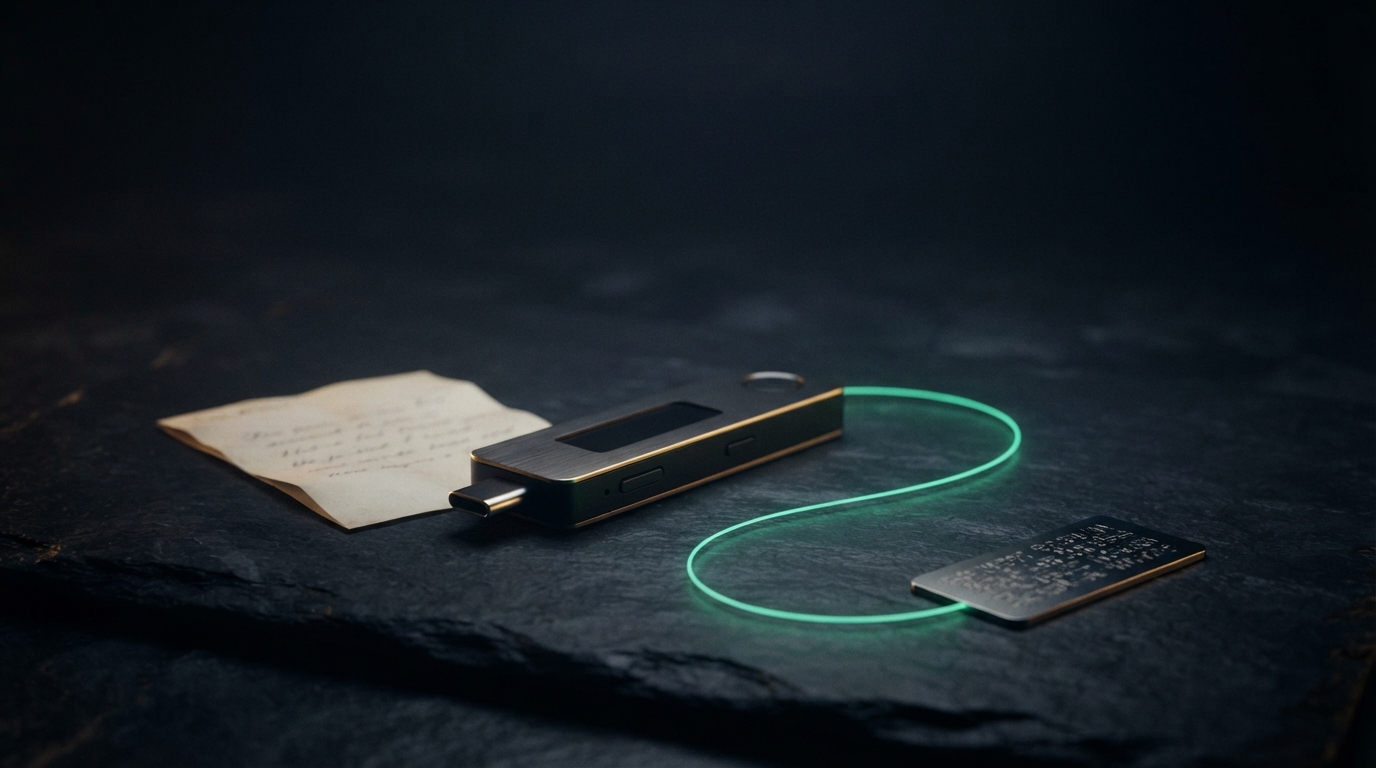
Crypto is the one asset that can vanish the day you do. Unlike a bank account or a house, no death certificate and no court order can unlock a self-custody wallet without the private key — the blockchain simply waits for a signature that will never come. Estimates put between 2.3 million and 3.7 million Bitcoin permanently out of reach, much of it because owners died without passing on access. By 2045, analysts expect roughly $6 trillion in crypto to transfer through inheritance — and most of it is unprepared for.
This guide explains plainly what happens to cryptocurrency when you die, why "my wife can't access my crypto" is the most common and most devastating inheritance failure, and exactly what to write down and where so the people you love are never left guessing.
The short version
When you die, your cryptocurrency does not disappear — but it becomes permanently inaccessible unless your heirs can find your seed phrase (the 12 or 24 recovery words) or the hardware wallet plus its PIN. A will alone is not enough: it gives your family the legal right to own the crypto, but not the technical ability to move it. You need both a will (or intestacy will decide) and a separate, private letter of instruction that records every seed phrase, PIN, exchange account and backup location — stored securely, never inside the will itself.
Why crypto inheritance is unlike any other asset
Every other asset you own has a recovery path after death. A bank freezes the account but releases funds to an executor with a death certificate and probate papers. A house transfers through the land registry. A brokerage sells or re-titles holdings on a court's instruction.
Cryptocurrency has no such institution to call. A self-custody wallet is controlled by a private key — a long string of mathematics that only the holder knows. The blockchain has no concept of a death certificate, no probate office, no "forgot password" reset. If nobody can produce the key, the coins sit at their address on the public ledger forever, visible to anyone but touchable by no one. The QuadrigaCX collapse made this famous: when the exchange's CEO died in 2018 as the only person holding the cold-wallet keys, 115,000 customers could not recover roughly $240 million.
The security that protects your crypto in life becomes the wall that locks your family out in death.
What actually controls your crypto (and what your family needs)
Before you can pass anything on, you need to know precisely what your heirs must recover. There are two storage models, and each demands a different handover:
- Exchange-held (custodial) — the exchange (Coinbase, Binance, Kraken) holds the keys. Your family claims it through the platform's deceased-account process with legal documents. Easier, but you depend on the exchange's terms.
- Self-custody (your own wallet) — you hold the keys, usually as a seed phrase of 12 or 24 words, often on a hardware wallet (Ledger, Trezor) protected by a PIN. No institution can help. Your family needs either the seed phrase or the device plus its PIN — ideally both.
The single most important sentence in crypto estate planning: your seed phrase is your crypto. Lose it and the funds are gone; share it carelessly and the funds are stolen.
"My wife can't access my crypto" — the most common failure
This is the query families type into search after it is already too late. The pattern is always the same:
- The owner held Bitcoin or Ethereum in a hardware wallet, told no one the PIN, and wrote the seed phrase in a place no one can find.
- The owner dies suddenly — no chance to walk a spouse through it.
- The spouse finds a USB-shaped device, does not understand it, and either throws it out, types the seed phrase into a phishing "wallet recovery" site, or photographs it and texts it to a relative (which auto-uploads to cloud storage where attackers scrape it).
Each of these ends in permanent loss. There is no bank to reverse a mistaken transfer, no support line that can restore a seed phrase burned by a scam. Industry recovery services exist, but they work from partial information — a corrupted wallet file, a damaged device — and they cannot create a key that no longer exists anywhere.
The fix is not technical cleverness. It is writing it down, in the right place, while you are alive.
How to pass on your crypto: the letter of instruction
Never put a seed phrase in a will. Wills become public documents during probate — anyone who reads the recovery phrase controls the funds instantly, before the estate is settled. Instead, keep a separate letter of instruction that lives privately and is released only to your trusted people.
A complete letter of instruction for crypto contains:
- Every wallet you hold — hardware wallets, software wallets, exchange accounts — with the platform or device name.
- Seed phrases for each self-custody wallet — the 12 or 24 words, in exact order, written by hand or engraved on metal (paper burns; fire and flood are real).
- PINs and passwords — the device PIN for each hardware wallet, and the login passwords for exchange accounts.
- Two-factor authentication backups — the recovery codes for authenticator apps, and the location of any hardware security keys.
- Physical locations — where the hardware wallet, the metal seed-phrase plate, and any encrypted USB backups are stored.
- Step-by-step instructions for a non-technical heir — how to plug in a Ledger, enter the PIN, and transfer funds to a new wallet. Assume they have never touched crypto.
Store this letter where it survives you but stays private: a fireproof safe, a safety deposit box your executor knows about, or — the cleanest path — a zero-knowledge family vault that releases it only to the people you named, only when it is needed. The same place that should hold your passwords and account access and your important documents for your family.
Staked crypto and other special cases
A few situations need extra notes in your letter:
- Staked crypto — assets locked in a staking contract may have an unbonding period (days to weeks) before they can be moved. Tell your heirs to expect a delay, not an error.
- DeFi positions — liquidity pools and lending positions may need to be unwound through specific interfaces; record the dApp names and wallet connections.
- Multisig wallets — a 2-of-3 setup needs two of three keys. If one key-holder is unavailable, the funds can lock. Document which keys live where and who holds them.
What to do right now (the 30-minute checklist)
- List every place you hold crypto — exchange accounts and self-custody wallets.
- For each self-custody wallet, confirm you can still read the seed phrase and unlock the device.
- Write the letter of instruction above, by hand, on durable material.
- Choose one trusted person and tell them the letter exists and where to find it — they do not need the contents yet, only the map.
- Store the letter in a place that survives fire, flood, and your own absence.
None of this requires a lawyer or a developer. It requires twenty minutes and the decision to stop assuming your family will figure it out.
The same vault that holds your documents, your accounts, and your letters to your family is the natural home for this map — so the people you love are guided to it exactly when they need it, and never left in the dark.