Home / Blog / Letter of Wishes vs Will: What Goes Where, and Why Families Need Both
WiseEnding Blog
Letter of Wishes vs Will: What Goes Where, and Why Families Need Both
The short answer
A will is a formal, witnessed, legally binding document that decides who inherits your estate, who administers it, and who guards your children. A letter of wishes is a private, non-binding companion that explains your reasoning, covers sentimental items and personal preferences, and can be updated freely. Binding decisions go in the will; guidance and meaning go in the letter.
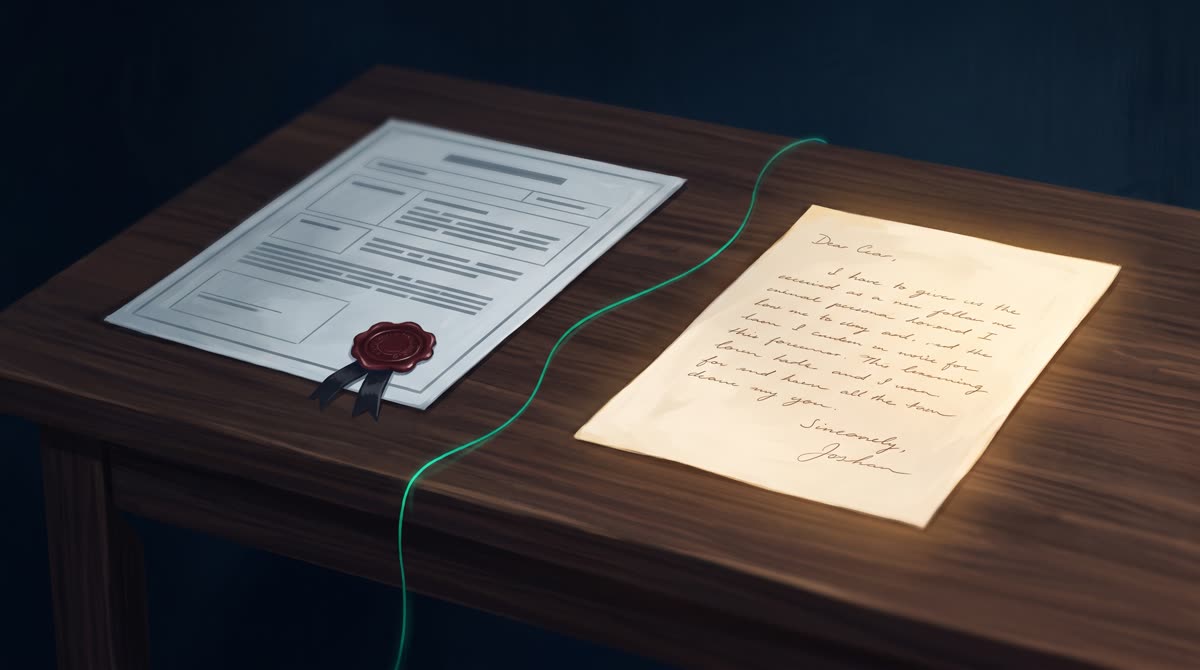
A will says who gets what. A letter of wishes says what you meant. Most families need both, and confusing them is one of the quiet ways a careful plan falls apart.
If you have ever written a will and felt it read like a legal cage, cold and technical and nothing like how you actually speak to the people you love, you have already felt the gap a letter of wishes fills. This guide explains the difference in plain terms, what belongs in each document, and how to keep them working together.
What is the difference between a will and a letter of wishes?
The difference between a will and a letter of wishes is legal force. A will is a formal, witnessed, legally binding document that directs who inherits your estate, who administers it, and who guards your children. A letter of wishes is an informal, private, non-binding document that sits alongside your will and guides the people carrying it out. It explains your reasoning, covers the small and sentimental things, and can be updated any time without a lawyer.
That one distinction, binding versus guiding, drives every other difference between them.
| | Will | Letter of wishes | |---|---|---| | Legally binding | Yes | No | | Formalities | Signed, witnessed, precise wording | None; plain language, your voice | | Who sees it | Becomes public in probate | Private, shared only with executors or trustees | | What it decides | Beneficiaries, executors, guardians, residue | Reasons, small gifts, guidance, preferences | | Updating | Formal codicil or a new will | Rewrite it whenever life changes | | Cost to change | Usually a solicitor fee | Free |
Is a letter of wishes legally binding?
No. A letter of wishes is not legally binding anywhere it is used, including England, Wales, and most common-law systems. Your executors and trustees should take it seriously and give it real weight, but they are not legally obliged to follow it, and a court will treat it as evidence of your intentions rather than as an instruction it must enforce.
This is the most important thing to understand, because it cuts both ways.
Anything you want to guarantee must go in the will itself. If you want your house to pass to a specific person, that is a will provision, not a letter of wishes provision. If you want a particular guardian for your children, that appointment belongs in the will. A letter of wishes cannot change who legally inherits, no matter how clearly it is written.
The freedom of a non-binding document is also its strength. Precisely because it carries no legal weight, you can write it in your own words, update it as often as you like, and say the things a formal document cannot.
What should go in a will, and what should go in a letter of wishes?
Put every binding decision in your will and every explanation, preference, and small or sentimental gift in your letter of wishes. The cleanest rule is this: if it changes who legally gets something, it belongs in the will; if it helps the people you leave behind understand and carry out your decisions, it belongs in the letter.
Belongs in the will
The will is where the law lives. It should name your beneficiaries and what each inherits, appoint your executors, appoint guardians for minor children, and set out any trusts and their trustees. It covers the residue of the estate, meaning whatever is left once specific gifts, debts, and expenses are settled. If you want something to be enforceable, it goes here.
Belongs in the letter of wishes
The letter is where your voice lives. It explains the reasoning behind decisions that might otherwise hurt or confuse, such as an unequal division between children. It guides guardians on how you would want your children raised, covering education, faith, and values. It is the natural home for possessions of modest financial but deep sentimental value, so you do not clutter the will with items that may be sold or lost before you die. It records funeral wishes, the people you want told, and practical guidance on digital accounts that change too often for a will. And because it is usually confidential where a will becomes public in probate, it is the right place for context you want held privately.
Why write a letter of wishes at all?
Because most family conflict after a death is not about the money. It is about meaning. When a will is silent on why, people fill the silence with their own story, and those stories rarely agree. A short, honest letter that says "this is what I decided and this is why" does more to protect a family's relationships than any clause a solicitor can draft.
It also protects your executors. Administering an estate involves dozens of small judgment calls the will never anticipated, and a letter tells the person making them what you would have wanted, so they are not guessing at your intentions while grieving. It keeps your will clean too: a will that tries to carry every preference and personal item becomes long, fragile, and expensive to maintain.
How do you write a letter of wishes?
Write it in plain language, addressed to your executors or trustees, and sign and date it. It needs no witnesses and no legal terminology. Keep it with your will so the two are found together, tell your executors it exists, and review it whenever your life or your will changes.
A few principles make the difference between a letter that helps and one that harms:
- Never contradict the will. The will takes precedence. If the two disagree, your wishes in the letter may be disregarded entirely, and the conflict itself can seed a dispute.
- Be specific about meaning, general about method. Say what outcome you hope for and why, and trust your executors on the how.
- Keep it current. Because it is free to update, an out-of-date letter is an avoidable one. Read it each year.
- Store it where it will be found. The single biggest weakness of a letter of wishes is that it is a separate document. If it is lost, it does not exist.
That last point is where most good intentions quietly fail. A letter of wishes in a drawer, a will with a solicitor, passwords in a notebook, and accounts spread across five apps is not a plan. It is a scavenger hunt for someone you love, at the worst moment of their life.
WiseEnding keeps your will, your letter of wishes, your documents, and your instructions together in one private, zero-knowledge family vault, with a Legacy Heartbeat that releases them to the people you choose, only when they are needed. Your voice and your legal plan, found together, exactly when your family needs both.
Frequently asked questions
Does a letter of wishes replace a will?
No. A letter of wishes never replaces a will. The will is the legally binding document that decides who inherits and who administers your estate. The letter only guides and explains. You need a valid, properly signed and witnessed will for your wishes to carry legal force.
Does a letter of wishes need to be witnessed?
No. Unlike a will, a letter of wishes does not need to be witnessed or follow any legal formalities. You should still sign and date it so your executors can be confident it is current and genuinely yours, and so an older draft is never mistaken for your latest wishes.
Can I change my letter of wishes without changing my will?
Yes, and this is one of its main advantages. You can rewrite it as often as your circumstances change, without a solicitor and without touching the will. The one rule is that you cannot use the letter to change who legally inherits; that kind of change must be made in the will itself.
What happens if my letter of wishes contradicts my will?
The will wins. Because the will is legally binding and the letter is not, anything in the letter that conflicts with the will is likely to be disregarded, and the contradiction itself can cause a dispute. Keep the two consistent, and if you change your mind about an inheritance, update the will.
Where should I keep my letter of wishes?
Keep it with your will so the two documents are found together, and make sure your executors know it exists and where to find it. A letter of wishes that cannot be found is the same as one that was never written, which is why a single, organised place for both is so valuable.