Home / Blog / How to Write a Legacy Letter to Your Family: What It Is, What to Say, and How to Start Today
WiseEnding Blog
How to Write a Legacy Letter to Your Family: What It Is, What to Say, and How to Start Today
The short answer
A legacy letter — also called an ethical will — is a personal, non-legal letter that passes your values, life lessons, family stories and hopes to the people you love. Unlike a legal will it distributes no property; it explains what the property never could. Write in your own voice, be specific, address people by name, and store it with your estate documents or in a family vault.
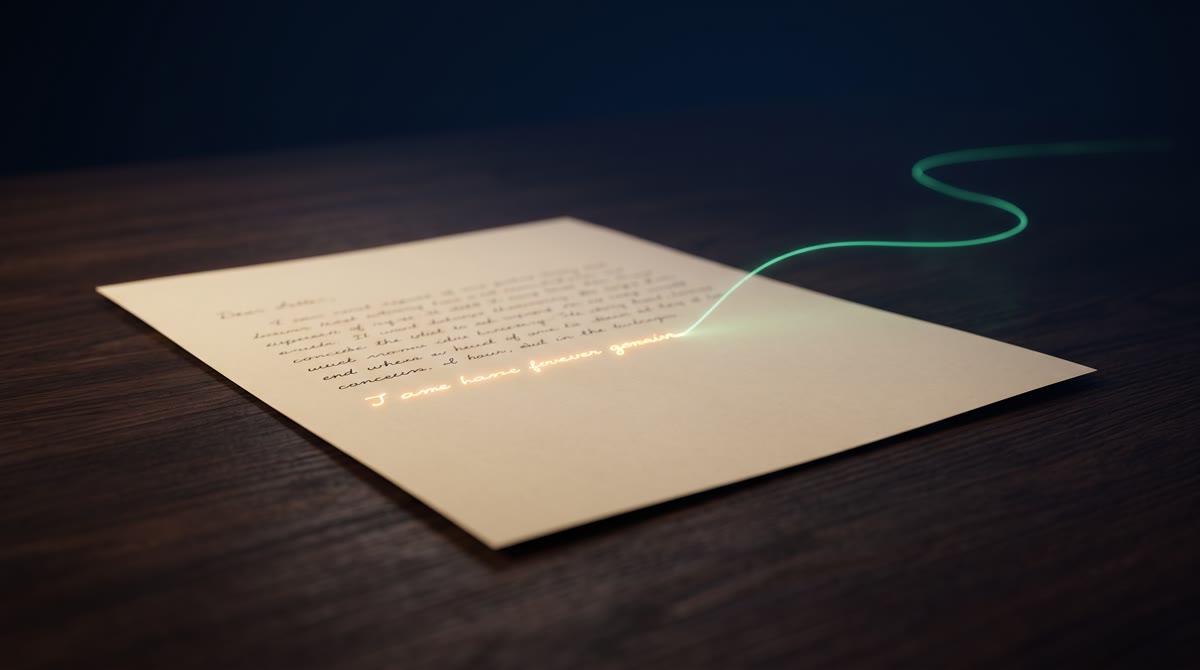
A legacy letter — also called an ethical will — is a personal, non-legal letter that passes your values, life lessons, family stories and hopes to the people you love. A legal will distributes what you owned; a legacy letter explains who you were. It carries no legal weight, transfers no property, and requires no lawyer — yet families consistently describe these letters as the most treasured thing the person left behind. Your will says who gets the house. The legacy letter says why the house mattered.
Anyone can write one, at any age, in any format — and the best time to start is while life is calm, not in a crisis. Here is what it is, what goes in it, the mistakes to avoid, and how to begin this week.
What is a legacy letter, exactly?
It is a letter from the heart, written to be read either while you are alive or after you are gone. The tradition is ancient — the practice of passing down a moral and spiritual inheritance alongside a material one runs through Jewish, Islamic and many other traditions, where it sits comfortably beside the formal instruments: the will, the wasiyya, the trust. The modern estate-planning world has rediscovered it under the name "ethical will" because legal documents turned out to be very good at moving assets and very bad at moving meaning.
Because it has no legal function, it has no legal limits. You can write it at thirty or at eighty. You can address it to your children, your spouse, a grandchild not yet born, or a friend who shaped your life. You can write one page or twenty. The only requirement is honesty.
Why write one at all?
Because the things your family will most want after you are gone are not in your filing cabinet. They are the story of how you met their mother. The reason you left a secure job. What your own father taught you about money that you never repeated out loud. What you were actually thinking during the hard years. Research and clinical experience agree on the same point: the letters families return to — the ones read aloud at kitchen tables years later — are not the eloquent ones. They are the specific ones.
There is also a benefit for the writer. The act of writing forces an honest self-assessment that daily life rarely demands: what did I actually learn, what do I actually hope, what should not be left unsaid. Many people discover the letter changes how they live the years after writing it.
What should a legacy letter include?
There is no required structure, but the most meaningful letters draw on five categories:
- The story behind your values. Not a list of values — anyone can write "I believe in hard work." What your family cannot reconstruct is the specific memory that formed it: the person who showed you, the moment you learned it the hard way. The value is the headline. The story underneath it is the inheritance.
- Lessons that cost you something. The mistake that redirected your life. What you wish you had understood at twenty-five. These carry more weight than advice because your family will know the person who paid for them.
- Stories your family does not know. You existed before your children were born, and that version of you has stories nobody living can tell. Family history disappears when nobody writes it down. A legacy letter is one of the few places it survives.
- Words for specific people. The most important section for most families — not wisdom addressed to "all of you," but something written to one person by name. What you see in them. What you noticed over the years. What you want them to know.
- Hopes, not instructions. An instruction says what you want them to do; a hope says what you wish for them, whatever they choose. Hopes carry love without weight. Instructions and expectations can leave guilt behind long after you are gone.
How do you actually start writing?
The blank page is the hardest part, and it is almost always solved the same way: with a better question. Start with one person. "Dear Sarah" works fine — you are not drafting a legal filing, so write the way you talk. If you would never say "I hereby bequeath my wisdom" out loud, do not write it.
Work in short sessions — twenty minutes is plenty; emotional writing is draining. Do not aim for a finished letter on the first pass: get the stories down, then shape them later. Be specific — "I loved our holidays" is forgettable; "the morning you caught your first fish and screamed so loudly you scared it back into the water" is not. And consider separate letters for separate people: what you want to say to your spouse is different from what you want to say to a grandchild, and neither letter diminishes the other.
What mistakes should you avoid?
The most common failure is preachiness. A letter that reads as a lecture on how to live gets set aside rather than treasured. Share your experience; resist prescribing. "Here is what I learned" lands differently from "here is what you should do."
The second trap is settling scores. Airing old grievances or assigning blame in a document read when no reply is possible can cause lasting damage. If you need to address something painful, acknowledge it plainly — "I saw that it was hard, and I wish it had gone differently" — rather than relitigating it. And beware creating guilt: "I sacrificed everything for this family" places a debt on the reader. The goal is to leave people feeling connected to you, not indebted.
Finally, do not write it once and never revisit it. Your values and relationships evolve. A letter written at forty may not reflect who you are at sixty-five — treat it as a living document and update it after the big turns: a marriage, a birth, a loss, a diagnosis, a reconciliation.
Written, audio, or video — does the format matter?
No. A handwritten letter carries warmth that is hard to replicate; a typed document is easier to edit and copy; a phone recording from your kitchen table preserves your voice and face in ways text cannot. The format that gets finished is the right one. If a blank page creates resistance, start with a voice memo and transcribe it later. Many people write the letter and record a short reading of it — the words for the archive, the voice for the heart.
Should you share it now or leave it for later?
Both are legitimate, and they do different things. Sharing it while you are alive opens a conversation — your family can ask questions, and the exchange often prompts others to write their own. Leaving it to be found preserves the emotional weight of discovery and avoids the awkwardness of reading deeply personal words face to face. Some people do both: share the letter, and leave a final version with their documents.
If you leave it for later, one rule is non-negotiable: someone must know it exists and where it is. The most beautiful letter ever written accomplishes nothing in a drawer nobody opens.
Where should you keep it?
Alongside everything else your family will need: your will, your insurance policies, your account map, your documents. A physical copy in a known place, a digital copy protected against fire and loss — and if it is digital, protected in a way that keeps it private until it is needed and guarantees it is found when it is. A letter no one can find is a letter never written.
WiseEnding is built for exactly this. The Family Vault keeps your letters, documents, account map and final messages in a zero-knowledge space only you can read — and the Legacy Heartbeat watches for your silence and releases each item to the person you chose, only when it is truly needed. Write the letter this week. Then make sure it can be found.